






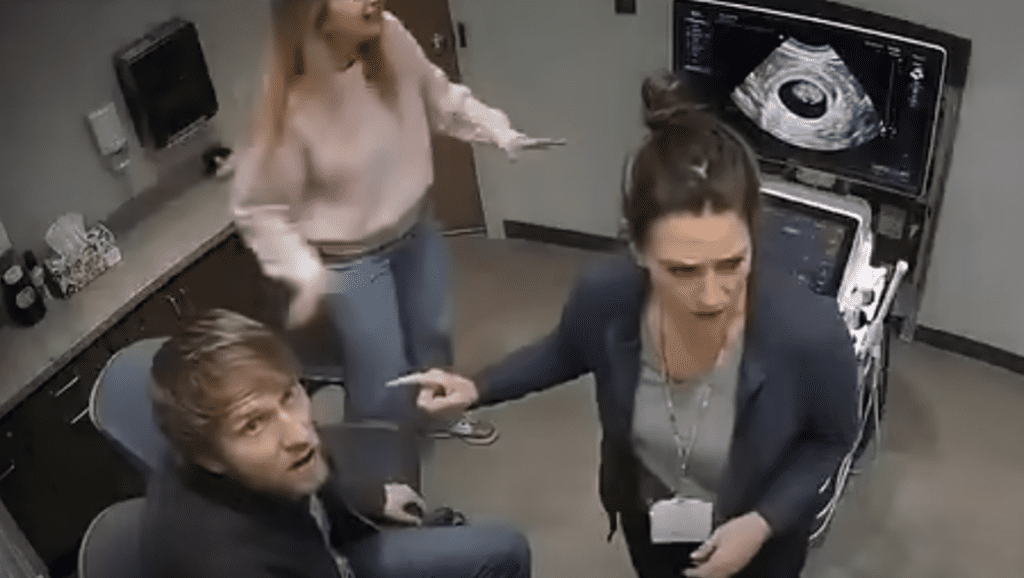
A deeply emotional and highly discussed clinical interaction has captured the attention of audiences online, shedding light on the intense psychological pressure surrounding unexpected prenatal diagnoses. The footage from the file 1032537699720097 SD.mp4 portrays a young couple attending what begins as a routine medical appointment inside a specialized ultrasound examination room labeled as US Room 3. The scene is recorded from an elevated security camera perspective, providing an unfiltered view of the medical environment, the clinical staff, and the expectant parents. The young woman, dressed in a light pink sweater and jeans, sits next to her partner, who is wearing a dark jacket and casual attire, as they face the diagnostic equipment. Standing before them is a female medical professional, wearing dark scrubs with her hair tied in a bun, who directs their attention to a large monitor displaying a live sonogram image. The initial atmosphere appears calm and clinical, typical of a standard prenatal checkup where parents expect to receive routine updates regarding their pregnancy. However, the emotional gravity of the situation completely shifts within a single moment, illustrating the volatile nature of unexpected prenatal medical revelations. This striking scene serves as a powerful reminder of the profound emotional vulnerability that families experience during diagnostic imaging procedures.
The Sudden Shift from Routine Clinical Scanning to Psychological Crisis
The core narrative of this dramatic medical video revolves around the exact second a routine medical explanation triggers a severe, acute panic response in the pregnant patient. As the healthcare provider points directly to the black-and-white sonogram on the screen and states that they can see the baby, the young woman’s behavior instantly transforms. Instead of a typical reaction of joy or curiosity, she stands up abruptly from her chair, physically recoiling away from the medical monitor in sheer distress. She places her hands over her mouth, visibly shaking as she screams repeatedly that she does not want that baby, exposing an intense state of psychological shock. Her partner looks on with a mixture of profound confusion and immediate concern, leaning back slightly before reaching out to comfort her as the crisis unfolds. The sudden physical movement and high-intensity vocalizations shatter the quiet, controlled environment of the medical office, catching the staff off guard. This powerful interaction highlights the unpredictable ways in which individuals process distressing or traumatic medical indicators during vulnerable life stages. It emphasizes that a prenatal diagnosis is not merely a clinical data point but a deeply personal reality that can instantly reshape a family’s emotional landscape.
Deconstructing the Role of Healthcare Providers in Managing Patient Trauma
The clinical management of sudden patient distress is a critical component of medical training that is vividly illustrated in the latter portion of this interaction. As the patient retreats toward the corner of the examination room, the medical professional immediately shifts her focus from operating the equipment to de-escalating the emotional crisis. She maintains a calm but firm demeanor, gesturing gently with her hand while politely asking the patient to calm down and breathe through the panic. This rapid transition underscores the complex dual responsibility that diagnostic technicians and doctors face when delivering unexpected or potentially challenging health news. Healthcare workers must remain objective while simultaneously providing a safe, empathetic space for patients experiencing sudden grief or psychological shock. The partner also attempts to intervene by asking what is wrong, illustrating the collective confusion and helplessness that often engulfs family members during a sudden medical emergency. Managing such highly charged interactions requires immense emotional intelligence, patience, and strict adherence to compassionate care protocols designed to protect patient dignity. This segment serves as an excellent case study for medical students learning how to navigate severe patient anxiety and emotional breakdowns in a high-stakes clinical setting.
The Technological Precision of Modern Prenatal Diagnostic Imaging
Behind the raw human drama captured in this clip lies the advanced technology of modern healthcare, specifically represented by the large medical imaging console in the center of the room. The system, featuring a prominent keyboard interface and a high-resolution display monitor, allows clinicians to observe fetal development with remarkable clarity. This level of technological sophistication means that structural anomalies, developmental markers, and potential health complications can be identified much earlier in a pregnancy than ever before. While early detection provides invaluable time for medical preparation and informed decision-making, it also exposes expectant parents to complex psychological realities early in their journey. The clear visualization of the fetus on the screen creates an immediate, undeniable link between diagnostic data and human emotion, as seen in the patient’s visceral reaction. This intersection of high-tech engineering and deep human sentiment defines the modern prenatal care experience, making robust psychological counseling an essential companion to physical scanning.
Public Discourse Surrounding Challenging Family Planning Decisions
The viral nature of this compelling video highlight has ignited a massive wave of public discussion across various digital platforms regarding the ethics and emotional weight of family planning. Online audiences are engaging in intense debates surrounding the complex choices families must make when faced with unexpected prenatal medical diagnoses. The provocative title accompanying the clip, young couple terminates pregnancy, immediately taps into deeply personal, societal, and philosophical arguments concerning bodily autonomy and reproductive health. Digital media tracking shows that content addressing these sensitive medical dilemmas consistently generates high levels of user interaction, commentary, and shared personal stories. Many viewers utilize the comment sections to discuss the necessity of comprehensive mental health support for parents navigating difficult genetic or structural ultrasound findings. This ongoing online conversation proves that digital media serves as a powerful, albeit polarizing, forum for examining the intricate realities of modern medical ethics. It highlights a growing public awareness that behind every clinical statistic or dramatic video snippet lies a profoundly complex human story that defies simple categorization.
Long-Term Mental Health Implications of Unexpected Medical Revelations
Analyzing the broader impact of sudden diagnostic trauma reveals a critical need for integrated psychological support systems within the maternal healthcare framework. When a patient experiences an acute panic response similar to the one documented in the footage, the psychological fallout can extend far beyond the walls of the examination room. Chronic anxiety, post-traumatic stress, and complicated grief are common among individuals who receive distressing news regarding their reproductive journeys. Medical institutions are increasingly recognizing that treating the physical aspects of a pregnancy complication is only half the battle; the emotional well-being of both partners must be prioritized. Providing immediate access to specialized genetic counselors, reproductive psychologists, and support groups can significantly mitigate the long-term trauma associated with difficult clinical outcomes. This comprehensive approach ensures that families are never left to process overwhelming medical realities in isolation, fostering long-term resilience and healing. Ultimately, this intense video leaves a lasting impression on its viewers, reminding the global medical community that compassion, mental health advocacy, and patient-centered care remain the absolute foundations of sustainable healthcare practices.