




Analyzing a Dramatic Highway Vehicle Fire: Real-Time Incident Breakdown
The open road often presents unpredictable hazards, but few incidents are as visually striking or immediately dangerous as a fully engulfed vehicle fire on a major thoroughfare. In this detailed analysis, we break down a compelling piece of footage capturing a severe highway truck fire unfolding in real time. The video offers a stark, unfiltered look at the immense volatility of vehicular combustion, the rapid generation of hazardous emissions, and the critical spatial dynamics that play out during an active roadside emergency. By examining the visual evidence from the first ignition cues to the towering columns of smoke, this article provides a comprehensive overview of the event, serving as a vital case study in highway safety, emergency response coordination, and accident scene management.
The Anatomy of a Roadside Emergency: Initial Sightings and Fire Progression
The Shocking Reality of a Highway Truck Fire
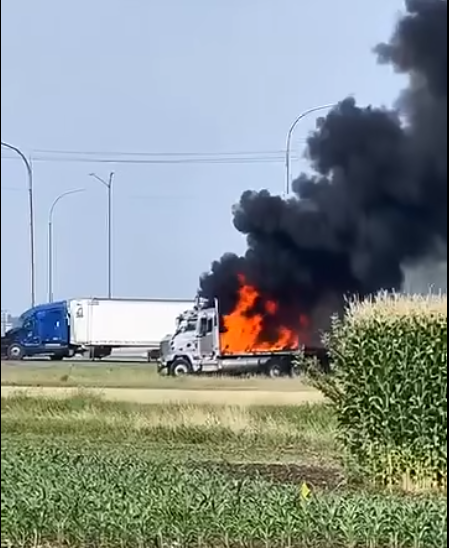
When observing the initial moments of the footage, the sheer intensity of the roadside emergency becomes instantly apparent. A large commercial vehicle, parked precariously along the shoulder of a divided highway, is already heavily compromised by an aggressive blaze. The primary source of the fire seems concentrated within the rear bed or trailer section of the truck, suggesting a cargo-related ignition or a catastrophic mechanical failure involving the rear axles or braking system. As the camera pans slightly, the bright orange flames can be seen actively devouring the structure of the vehicle, demonstrating how quickly modern automotive materials and potential industrial payloads can fuel an uncontrollable chemical reaction.
Rapid Escalation and Fuel Consumption
Within just a matter of seconds, the vehicle combustion analysis reveals an alarming rate of escalation. The flames do not remain static; instead, they aggressively expand, fueled by the available oxygen on the open highway and the highly flammable components of the truck itself. This rapid progression underscores the extreme danger faced by motorists and first responders during the initial phases of a highway crisis. The intense thermal radiation emitting from the core of the blaze creates a hazardous zone that effectively halts nearby traffic, transforming a standard transit route into a volatile disaster scene in the blink of an eye.
Environmental Impact and Smoke Plume Dynamics
Visualizing Hazardous Smoke Emissions
One of the most prominent features of this dramatic incident is the massive, billowing column of dense, jet-black smoke rising high into the atmosphere. This visual indicator is a textbook example of hazardous smoke emissions, pointing to the incomplete combustion of synthetic materials, rubber tires, diesel fuel, or specialized cargo. The opacity and thick texture of the plume signify a high concentration of toxic particulates and carbon monoxide, which pose an immediate respiratory threat to anyone in the immediate downwind trajectory. The sheer volume of the smoke quickly blankets the local horizon, creating a stark contrast against the otherwise clear, overcast daytime sky.
Wind Trends and Atmospheric Dispersion
Analyzing the movement of the plume provides crucial insights into the prevailing weather conditions and their impact on highway accident scene safety. The smoke does not rise perfectly vertically; rather, it is swept forcefully to the right side of the frame by a steady crosswind. This atmospheric dispersion plays a dual role in the evolution of the emergency. While it helps to clear the immediate breathing space directly above the roadway to some extent, it simultaneously pushes a thick curtain of toxic air across adjacent agricultural fields and potentially toward secondary roadways. For emergency dispatchers and arriving fire crews, monitoring these wind patterns is absolutely critical for determining the safest approach angles and establishing effective evacuation perimeters.
Traffic Visuals and Proximity Dynamics
+------------------------+---------------------------------------------------------+
| Vehicle Type           | Observed Behavior & Proximity to Fire Scene             |
+------------------------+---------------------------------------------------------+
| White Pickup Truck     | Stationary on the left shoulder, flashing hazard lights |
| Blue Semi-Truck        | Moving slowly past the blaze via the far left lane      |
| Burning Cargo Truck    | Fully engulfed on the right shoulder, emitting smoke    |
+------------------------+---------------------------------------------------------+
Navigating the Danger Zone
The video highlights a fascinating and tense dynamic regarding roadway hazard management and how passing motorists react to an active disaster. In the background, a large blue semi-truck with a white trailer can be seen navigating the highway, carefully steering into the leftmost lane to maximize its distance from the burning vehicle. This slow, deliberate movement showcases the caution required when passing an active inferno, as the intense heat alone can damage passing vehicles or cause secondary distractions. The contrast between the moving blue semi-truck and the stationary, roaring fire emphasizes the disrupted flow of commerce and transit that inevitably accompanies such severe highway disruptions.
The Role of Secondary Support Vehicles
Positioned further back on the left shoulder is a white pickup truck, which appears to have its hazard lights activated to warn oncoming traffic of the impending danger ahead. In the context of emergency response coordination, civilian or utility vehicles often play an accidental but crucial role in early scene management before official state troopers or fire engines arrive. By occupying the opposite shoulder and flashing warning lights, this vehicle helps to naturally slow down the approaching traffic stream, reducing the likelihood of a high-speed, multi-car pileup. The spatial arrangement of these three distinct vehicles—the burning truck, the passing semi-truck, and the shielding pickup—presents a vivid picture of a highway caught in a state of sudden, high-stakes improvisation.
Agricultural Settings and Broader Safety Implications
The Surrounding Rural Landscape
The backdrop of this intense highway fire features an expansive, green agricultural field, likely filled with young corn crops or similar local vegetation. This rural setting adds a unique layer to the vehicle fire safety discussion, as the threat of a secondary wildfire is a constant concern in open-country environments. Sparks, embers, or burning debris blown from the truck bed could easily land in the dry grass along the ditch, igniting a secondary grass fire that could quickly spread into the cultivated fields. Fortunately, the green, moisture-rich state of the crops appears to act as a natural buffer, minimizing the immediate risk of a large-scale agricultural blaze, though the proximity remains a point of high anxiety for onlookers.
Key Takeaways for Modern Highway Safety
Ultimately, this striking footage serves as a powerful reminder of the fragility of highway safety and the vital importance of rigorous vehicle maintenance and situational awareness. A sudden highway truck fire can instantly transform a routine delivery route into a multi-agency emergency scenario requiring rapid deployment of firefighting assets and traffic control measures. For fleet operators and everyday drivers alike, understanding the rapid timeline of vehicle combustion and the immense reach of toxic smoke plumes is essential. By studying these real-world incidents, transportation authorities can continue to refine their safety protocols, ensuring that when the unexpected happens on the open road, the collective response is swift, coordinated, and capable of mitigating further harm.